


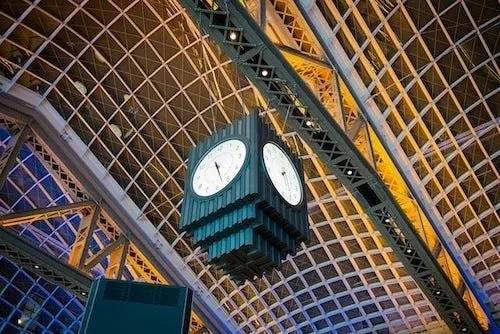
The best train trips from NYC have a certain romance to them:
- You show up.
- You sit down.
- Someone else handles the movement.
No traffic.
No parking.
No white-knuckle vigilance on unfamiliar roads.
For train trips from New York City, that alone can feel like a gift.
But here’s the part that rarely gets said out loud.
Not every trip that can be done by train should be.
Some routes feel effortless and restorative.
Others look great on paper and quietly add friction once you’re off the platform.
This guide exists to separate the two.
I love road trips. I always have.
But I also appreciate train trips for what they do best. That is, simplifying the journey when the conditions are right.
That usually means:
- A direct or frequent route
- A walkable town or city at the other end
- A pace that rewards slowing down, not rushing through
When those pieces line up, train travel shines.
When they don’t, you’re left juggling transfers, taxis, timing, and expectations. That can still work, but it helps to know for what you’re signing up.
As a Greenwich, Connecticut innkeeper about 45 minutes from Grand Central, I see this play out all the time. Guests use the train for day trips, weekend escapes, and longer rail journeys into New England. Some come back glowing. Others come back tired for reasons that had nothing to do with distance.
The difference is rarely the destination.
It’s whether the trip matched the way they wanted to travel.
So rather than list every place you can reach by rail, this guide focuses on:
- Which train trips from NYC actually feel good
- Which weekend getaways and day trips work best without a car from New York City
- Where a little realism goes a long way
You don’t need to do everything.
You just need to choose the trips that fit.
That’s where we’ll start.
Ready to explore the best train trips from NYC? Let’s get into it:
 Map design by Stanton House Inn with elements from Flaticon

When Taking Train Trips from NYC Actually Makes Sense
Before getting into specific routes and destinations, it helps to pause.
Train travel from New York City can feel wonderfully simple.
It can also feel quietly complicated if the conditions are wrong.
The difference usually comes down to fit.
Taking the train from NYC tends to work best when:
- The route is direct or runs frequently
- The station puts you close to where you want to be
- You are comfortable moving at a slightly slower pace
- The journey itself is part of the appeal
When those pieces line up, the train removes friction.
You arrive calmer than when you left.
Train travel starts to work against you when:
- The trip requires multiple transfers
- The station sits far from the places you want to explore
- You need total flexibility once you arrive
- You are trying to pack too much into a short window
None of this makes a trip “bad.”
It just means the train may not be doing you any favors.
Distance alone is rarely the deciding factor.
A short ride with awkward logistics can feel longer than a smooth trip that covers more ground.
This is especially true for day trips.
If you spend half the day managing transportation, the return ride can feel heavier than it should.
The goal of this guide is not to convince you to take the train everywhere.
It is to help you recognize when the train simplifies the experience and when it quietly complicates it.
If ease matters to you, keep reading.
If flexibility matters more, you may want to be selective.
That clarity will make the rest of this guide much more useful.
You’re welcome.
The Best Scenic Train Rides from NYC

Some train trips are about getting somewhere efficiently.
Scenic train rides are not.
These are the routes where the view earns your attention, the pace slows down, and the ride becomes part of the experience. They work best when you are not trying to optimize every hour.
If you are watching the clock, these trips will feel way too long.
If you are watching the window, they feel quite generous.
The Hudson Line (Metro-North)
This is the most scenic train ride most New Yorkers never think twice about.
Once the train clears the Bronx, the Hudson River takes over. Cliffs rise. Marinas drift past. Old towns appear and disappear at a comfortable pace. It feels calm in a way that sneaks up on you.
Why the train works here
- The tracks of the Hudson Valley Line run close to the river for long stretches
- Many stations sit near walkable town centers, perfect for MetroNorth day trips
- You can enjoy the Hudson River Valley scenery without committing to a long journey
Trip basics
- Depart from: Grand Central Terminal
- Train: Metro-North Hudson Line
- Typical ride length: About 60 to 90 minutes, depending on the stop
- Works best as: A day trip or a relaxed overnight
- Last mile: Walkable in places like Beacon and Cold Spring
Good to know
Fall weekends get crowded, especially once Hudson Valley fall foliage peaks. Earlier trains and weekday rides feel noticeably calmer.
If scenery is your main reason for going, this route rewards sitting on the river side of the train and slowing down your expectations.
The Adirondack Route (Amtrak)
This is one of the most scenic train rides in the Northeast.
It’s also one of the longest.
The Adirondack route follows rivers, forests, and wide stretches of open country on its way north. It feels expansive in a way shorter rides never quite manage.
Why the train works here
- The views change slowly and consistently as you head towards the Adirondack Mountains
- You are free to:
- Read
- Nap
- Or stare out the window
- The travel day becomes part of the trip
Trip basics
- Depart from: Penn Station
- Train: Amtrak Adirondack
- Typical ride length: A full travel day
- Works best as: An overnight or multi-night trip
- Last mile: Varies by destination and requires planning
Good to know
This is not a casual add-on. You’ve got to accept the time commitment and treat the ride as part of the experience, not an inconvenience to endure.
Quiet seasons can be just as rewarding as peak foliage if crowds are not a priority.
Montreal to NYC (By Train)
This is not an efficient trip.
That said, it’s one of my favorites.
I took the train from Montreal to New York City in early April. Not peak season. Not ideal weather. Still quite memorable. A long day of motion, reflection, and watching landscapes slowly change.
Why the train works here
- The length creates mental space
- The border crossing happens gradually, not abruptly
- You settle into the rhythm of travel instead of fighting it
Trip basics
- Depart from: Montreal
- Arrive at: Penn Station
- Train: Amtrak international service
- Typical ride length: Very long and requires commitment
- Works best as: Part of a longer itinerary
Good to know
If efficiency is your top priority, flying makes more sense. If you enjoy contemplative travel days and do not mind imperfection, this route has a way of staying with you.
I loved passing through cute little Hudson Valley towns, the length of New York State.
Trips like this reward patience more than planning.
Charming Small Towns You Can Reach by Train

Small towns near NYC are where train travel often works best.
You step off the platform.
You start walking.
And the pace shifts all of a sudden.
These trips shine when the station sits close to town and the experience does not depend on having a car (or cab ride). Coffee shops, bookstores, parks, and a good meal do the heavy lifting.
A few of the top day trips from NYC by train include:
Greenwich, Connecticut
Greenwich is more flexible than most expect.
It works as:
- A day trip
- A standalone destination
- A pause before heading deeper into New England
And that range is part of the appeal.
Once you arrive, downtown unfolds at a comfortable pace. Shops, cafés, historic streets, and green space sit close together, which makes the train an easy choice.
Why the train works here
- Trains run frequently from New York City
- The train station is in downtown Greenwich (so, very walkable)
- You can enjoy the town without needing a car
Trip basics
- Depart from: Grand Central Terminal
- Train: Metro-North New Haven Line
- Typical ride length: About 45 minutes
- Works best as: A day trip or overnight stay
- Last mile: Walkable downtown; short rides to beaches and parks
Good to know
Greenwich works best heading east. It makes no sense as a base for Hudson Valley trips unless you enjoy doubling back through the city.
For a deeper look at logistics, timing, and what to see once you arrive, our Metro-North to Greenwich guide breaks it down in detail.
Rhinebeck, New York
Rhinebeck feels designed for lingering.
Independent shops. Historic homes. A main street that invites wandering without an agenda. It rewards travelers who stay a little longer.
Why the train works here
- Train service gets you close enough to keep things simple
- The town itself is compact and easy to explore
- An overnight stay allows the pace to settle
Trip basics
- Depart from: Penn Station or Grand Central Terminal
- Train: Amtrak or Metro-North, followed by a short ride
- Typical ride length: Around two hours total
- Works best as: An overnight trip
- Last mile: Short taxi or rideshare from the station
Good to know
This is not a true step-off-and-stroll trip. It works best if you are comfortable with a short transfer and plan to stay at least one night.
Trying to rush Rhinebeck, NY, into a day trip can feel unsatisfying.
Montclair, New Jersey
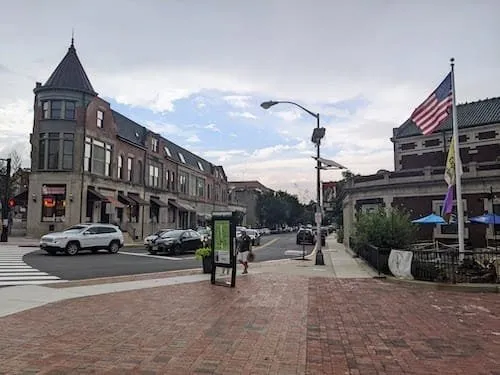
Montclair reads as livable the moment you arrive.
Tree-lined streets. Good coffee. A downtown that starts as soon as you arrive. It is an easy place to spend a few unhurried hours.
Why the train works here
- Direct commuter rail service from New York
- Downtown begins right near the station
- No car necessary to enjoy the town
Trip basics
- Depart from: Penn Station
- Train: NJ Transit
- Typical ride length: Under one hour
- Works best as: A relaxed day trip
- Last mile: Fully walkable
Good to know
Weekends feel laid-back. Weekday rush hours are commuter territory. Timing matters more than distance here.
Beacon, New York

Beacon pairs small-town scale with creative energy.
Art spaces, river views, and access to nature give it range without feeling spread out. It is one of the easiest Hudson Valley towns to enjoy without a car.
Why the train works here
- The station sits close to town (a mere uphill walk)
- Main attractions are walkable
- You can combine town time with a river walk or hike
Trip basics
- Depart from: Grand Central Terminal
- Train: Metro-North Hudson Line
- Typical ride length: About 90 minutes
- Works best as: A day trip or overnight
- Last mile: Walkable from the station
Good to know
Beacon, NY, gets busy on fall weekends and sunny Saturdays. Early trains and shoulder seasons feel calmer and more spacious.
True Day Trips from NYC by Train
A true day trip leaves no residue.
You go out in the morning.
You come back the same night.
The day feels full, not compressed.
These trips work when trains run often, stations land close to the action, and you never feel rushed to justify the effort. Miss one of those conditions, and the return ride drags.
Every destination below holds that standard.
Promise.
Aside from some I’ve already mentioned:
A few more standouts include:
New Haven, Connecticut
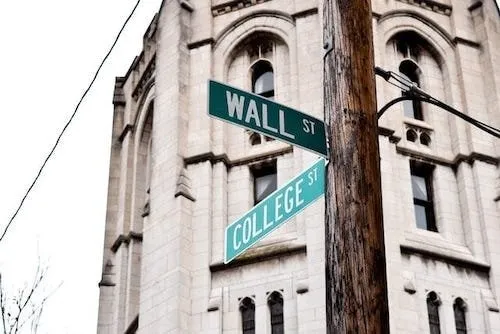
New Haven, CT, more than pulls its weight.
Food. Culture. Walkability. Enough substance to fill a day without forcing decisions. The train drops you close, and the city takes good care of you.
Why the train works here
- Frequent service from New York City
- Downtown, Yale, and restaurants sit near the station
- The day stays contained without a car
Trip basics
- Depart from: Grand Central Terminal
- Train: Metro-North New Haven Line
- Typical ride length: About 90 minutes
- Works best as: A full day trip
- Last mile: Walkable downtown; short rides for outer neighborhoods
Good to know
New Haven rewards a loose plan. Pick one museum, one meal, and leave room to wander. Trying to cram everything in undercuts the day.
Cold Spring, New York
Cold Spring defines the classic out-and-back.
A compact village. A clear main street. Trails nearby for those who want elevation. It delivers exactly what a day trip should.
Why the train works here
- The station sits steps from Main Street
- Everything fits into a short radius
- You can mix walking, food, and scenery easily
Trip basics
- Depart from: Grand Central Terminal
- Train: Metro-North Hudson Line
- Typical ride length: About 75 minutes
- Works best as: A day trip
- Last mile: Fully walkable
Good to know
Cold Spring, New York, fills quickly during peak foliage. Midweek trips keep the town intact.
Food, Culture, and History by Train
Some trips work because the town is walkable.
Others work because the destination carries the weight.
These are places where museums, meals, architecture, or history give the day shape. You arrive with intent. You leave satisfied.
The train does its job. The destination does the rest.
New Haven, Connecticut, deserves a spot on this list, too. But I’ve already mentioned it, and I’m verbose as it is.
Kingston, New York
Kingston trades polish for gritty charm.
History runs through its streets, but the appeal comes from texture rather than spectacle. This is a town for people who like layers.
Like yours truly.
Why the train works here
- Train service gets you close
- Historic districts anchor the visit
- An overnight stay allows the place to open up
Trip basics
- Depart from: Penn Station or Grand Central Terminal
- Train: Amtrak or Metro-North, followed by a short ride
- Typical ride length: About two hours total
- Works best as: Overnight
- Last mile: Short taxi or rideshare
Good to know
Kingston, NY, rewards curiosity. Give it time and skip rigid plans.
Philadelphia, Pennsylvania

Philadelphia works because it stacks history tightly.
You can walk between landmarks that shaped the country, stop for a meal that holds its own, and still feel grounded by the end of the day.
Why the train works here
- Direct service from New York
- Major historic sites cluster together
- Public transit fills the gaps cleanly
Trip basics
- Depart from: Penn Station
- Train: Amtrak Northeast Corridor
- Typical ride length: About 90 minutes
- Works best as: A full day or overnight
- Last mile: Walkable core with subway support
Good to know
Philadelphia rewards structure. Know which neighborhood you are targeting before you arrive.
Washington, D.C.
Washington brings scale.
Monuments, museums, and neighborhoods demand time and energy. The train makes the approach clean, but the day requires intention.
Why the train works here
- Frequent, direct service from New York
- Museums and landmarks anchor the day
- Metro access extends reach without friction
Trip basics
- Depart from: Penn Station
- Train: Amtrak Northeast Corridor
- Typical ride length: About three hours
- Works best as: Overnight or long day
- Last mile: Metro access throughout the city
Good to know
A single day scratches the surface (and barely). An overnight trip is way better.
Boston, Massachusetts
Boston compresses history into daily life.
Old streets, layered neighborhoods, and institutions that shaped the country sit inside a walkable frame. The train keeps the arrival simple.
Why the train works here
- Direct rail service from New York
- Historic districts connect on foot
- Public transit fills longer gaps
Trip basics
- Depart from: Penn Station
- Train: Amtrak Northeast Corridor
- Typical ride length: About four hours
- Works best as: Overnight or weekend
- Last mile: Walkable core with subway support
Good to know
Boston rewards planning by neighborhood. Choose one area and commit.
Family-Friendly Train Trips from NYC
This guide focuses on trips that work well for adults.
That said, some train routes also hold up for families, especially those traveling with older kids.
The standard stays the same:
- Direct or frequent service
- Short walks from the station
- Destinations that tolerate breaks and unstructured time
More than a few of the destinations already covered share the same traits that make train travel work well for families:
- Few transfers
- Short walks
- Clear centers of gravity
- Built-in stopping points
Those places include:
- New Haven
- Philadelphia
- Washington, D.C.
- Boston
- Beacon
- Cold Spring
A few more places that work include:
Mystic, Connecticut

Mystic supports family travel because the pieces sit close together.
The town centers around maritime history, walkable streets, and attractions that hold attention without constant movement. Mystic Seaport Museum, the aquarium, and Olde Mistick Village give the day shape without forcing a schedule.
Why the train works here
- Rail service connects New York to southeastern Connecticut
- Key attractions cluster near town
- The visit works as a day trip or overnight
Trip basics
- Depart from: Grand Central Terminal (Metro-North with Amtrak connection) or Penn Station (Amtrak)
- Typical ride length: Roughly 3+ hours one way
- Last mile: Short taxi or rideshare from Mystic station to the aquarium and Olde Mistick Village
Good to know
This is a longer ride than most day trips. Mystic, CT, works best when the train ride itself is treated as part of the experience.
Lancaster, Pennsylvania
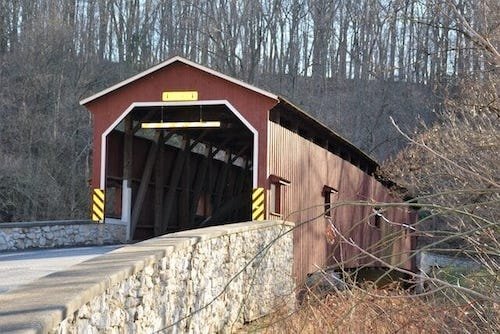
Lancaster offers plenty of structure.
Amish Country, museums, rail excursions, and contained attractions give clear options without sprawl. The experience stays grounded and predictable.
Why the train works here
- Direct rail access from New York
- A clear center of gravity once you arrive
- Activities that tolerate slower pacing
Good to know
Plan on about 2.5 to 3 hours by Amtrak from New York, with a short rideshare or hotel shuttle once you arrive.
Lancaster works best as an overnight trip. Trying to compress it into a single day often shortchanges the visit.
Longer Train Trips Worth Planning Around
Some train trips succeed because they are short.
Others succeed because you give them time.
These are not trips to squeeze into a single day or rush through between obligations. They work when the travel day counts and the destination rewards staying put.
Here, commitment matters more than mileage.
Vermont by Train
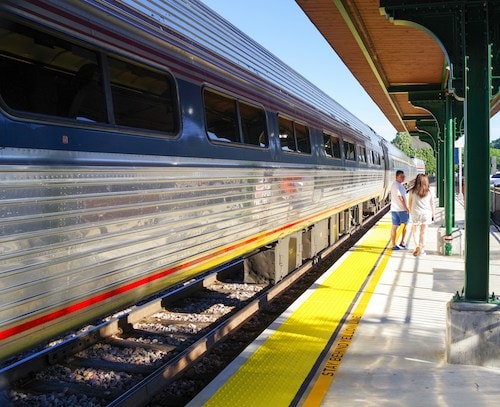
Vermont trips ask for buy-in.
The ride stretches out. The scenery takes its time. Towns reward stillness more than motion. This is not a place to rush through.
Routes like the Ethan Allen Express from NYC to Burlington make the point clearly: you commit to a full travel day, and Vermont does the rest.
Train routes into Vermont from NYC work best when:
- you plan at least one overnight, and
- you choose where to stay before worrying about how fast you will arrive.
The train does not shorten the journey.
It reframes it.
Montreal to New York City (By Train)
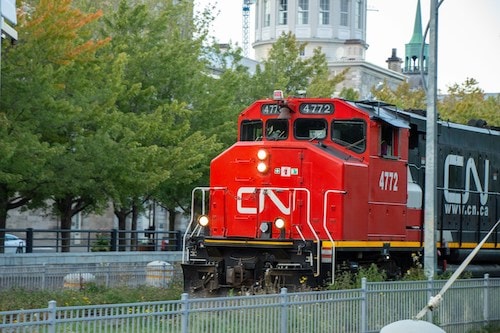
As mentioned earlier, the Montreal–NYC ride is a long day on the rails, but it’s one of the most memorable when you approach it with the right expectations.
Frequently Asked Questions About Train Trips from NYC
What are the best train trips from NYC?
The best train trips from NYC combine reliable service with destinations that work on foot.
Standout examples include:
- Greenwich (easy, walkable, frequent service)
- Beacon (town, river, and trails near the station)
- Philadelphia (dense historic core)
- New Haven (food, museums, walkability)
These trips succeed because the train simplifies arrival instead of complicating it.
What are the best day trips from NYC by train?
Strong day trips allow you to leave in the morning and return the same night without rushing.
Reliable options include:
- Cold Spring
- Beacon
- Greenwich
- Montclair
- New Haven
Each keeps walking distances short and avoids tight return windows.
What is the most scenic train ride from NYC?
Scenic train rides reward travelers who treat the ride as part of the trip.
The strongest examples are:
- The Hudson Line to Beacon or Cold Spring
- Amtrak routes north toward Vermont
- Long-haul trips between Montreal and New York City
These routes deliver consistent views and slower pacing.
Can you do weekend getaways from NYC without a car?
Yes, when the destination supports walking and clustered attractions.
Car-free weekend standouts include:
- Greenwich
- Mystic
- Philadelphia
- Boston
- Washington, D.C.
Many places that feel rushed as day trips come into their own overnight.
When does taking the train make more sense than driving?
The train often wins when traffic, parking, or city driving adds friction.
That advantage shows up clearly for trips to:
- New Haven
- Philadelphia
- Washington, D.C.
- Boston
Driving makes more sense for remote areas or places built around sprawl.
Is Amtrak or commuter rail better for trips from NYC?
They serve different kinds of trips.
Commuter rail works best for:
- Greenwich
- Beacon
- Cold Spring
Amtrak works best for:
- Philadelphia
- Washington, D.C.
- Boston
- Montreal
The choice depends on distance and pacing, not convenience alone.
Are train trips from NYC good year-round?
Yes, with expectations adjusted.
Seasonality affects crowd levels more than viability. For example:
- Fall crowds surge in the Hudson Valley around Beacon and Cold Spring
- Winter improves museum-focused trips to Washington, D.C. and Philadelphia
- Shoulder seasons favor longer rides toward Vermont or Canada
Train travel rewards flexibility more than perfect timing.
How should I decide which train trip to take?
Start with the kind of trip you want.
- For easy day trips, look at Greenwich or Montclair
- For scenic rides, choose the Hudson Line or longer northbound routes
- For culture-heavy weekends, focus on Philadelphia, Boston, or Washington, D.C.
When the destination matches the pace you want, the train does the rest.
Updated and republished: January 7, 2026


