


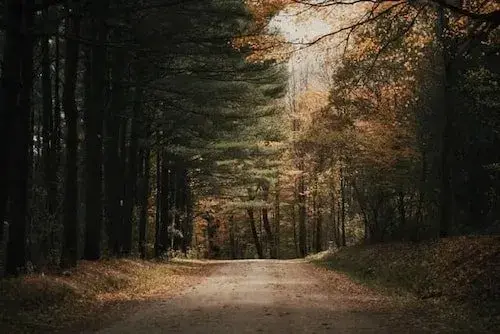
People talk about the Litchfield Hills like it’s one place.
It isn’t.
The Litchfield Hills are the rolling northwest corner of Connecticut. Come for:
- Small historic towns
- Covered bridges
- Waterfalls
- Hiking trails
- And antique shops
Plus some of the state’s best fall color. The towns up in northwestern Connecticut are different in ways that change how you should spend the day. For a first visit, I’d drive my favorite one-day route: New Milford, Kent, West Cornwall and Litchfield.
I live in Greenwich, where I run a 21-room inn. The Litchfield Hills region is what I pencil in, on at least one weekend, every fall. When I lived in Charleston, I flew home each October just to make this trip with my parents. These days I’m about 90 minutes away, and I still go up all the time.
Everybody talks about fall up here, but every season works for a different reason. Spring is kind of like fall in reverse.
 Map design by Stanton House Inn with elements from Flaticon

Jump to: One-day route · Which town · Things to do · Where to eat · Where to stay · Best time · FAQ
Planning the drive? I put together a free Litchfield County visitor’s guide. It has the route, the map and the video, all in one place for the car.
Where are the Litchfield Hills in Connecticut?
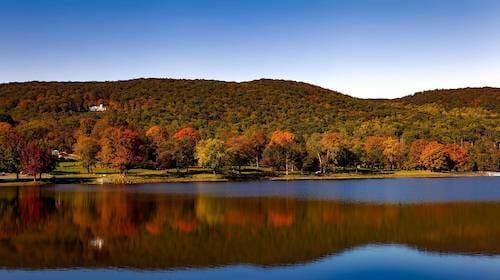
The Litchfield Hills cover most of Litchfield County, in the northwest corner of Connecticut. People use the two names loosely, and for planning a trip that’s fine, but they aren’t technically identical. Some guides stretch “the Hills” a little past the county line.
From Greenwich, New Milford is about 90 minutes, give or take traffic. From Manhattan, plan on about two hours. I take the Merritt Parkway, pick up Route 7 past Danbury, and follow the Housatonic River north. Route 8 from Bridgeport works too if you’re heading for Litchfield first.
Two practical notes before you go. This is car country, and you can’t take the train up here. And cell service drops in the hills, so download your map before you lose signal.
A short history of the Litchfield Hills
I’m into history. I like a place more when I know why it looks the way it does. And it’s what I do when guests ask me about Connecticut: I play tour guide.
So here are five things that explain what you’re looking at up here.
- The King of England became bullets here. In 1776, New Yorkers pulled down a lead statue of King George III. Pieces of it were carted to Litchfield, where local women melted them into tens of thousands of musket balls. That removed any doubt about where the town stood.
- America’s first law school is on South Street. Tapping Reeve started teaching law out of his home around 1784. Aaron Burr, his brother-in-law, had studied with him, and the school went on to train vice presidents, senators and Supreme Court justices. The building is still there, and it’s small enough to see in half an hour.
- Girls got a serious education here, early. Sarah Pierce opened the Litchfield Female Academy in 1792, when schooling for young women was rare. Harriet Beecher Stowe, who later wrote Uncle Tom’s Cabin, was born in Litchfield and went to that school.
- The quiet northwest corner used to be iron country. Salisbury had iron ore and furnaces, and they made cannon for the Continental Army. When you see old stone furnace ruins in the woods up here, that’s what they are. Beckley Furnace, near Norfolk, is the one you can walk right up to.
- The woods are younger than the stone walls. In the 1800s, most of this land was cleared for farms. Then farmers left for better soil out west, and the forest grew back. That’s why you’ll see stone walls running through the middle of the woods. They used to be fences around fields.
The Litchfield Hills in one day: four New England towns, one river
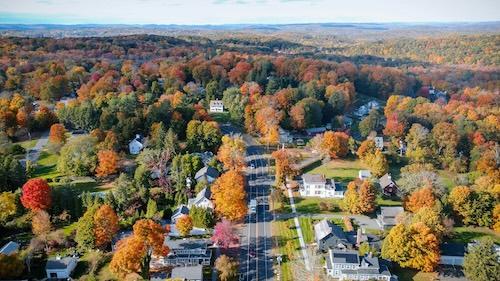
The route: New Milford → Kent → West Cornwall → Litchfield
Best for: a first visit
Time: one full day
You’ll need: a car
Best seasons: spring through fall
Start: New Milford, about 90 minutes from Greenwich
Finish: dinner in Litchfield
Distance: about 95 miles or so, Greenwich to Litchfield by this route
Here’s how I think about a day like this. Four stops, one of them is dinner. More than four, and the day starts running you instead of the other way around.
Each town below is one stop. Pick one or two things in each, and let the rest go.
I’m not ranking these towns one through four. I’m sorting them by what each one is good for. What deserves a full stop, and what’s really a photo and maybe 20 minutes of poking around?
New Milford: the green and your morning
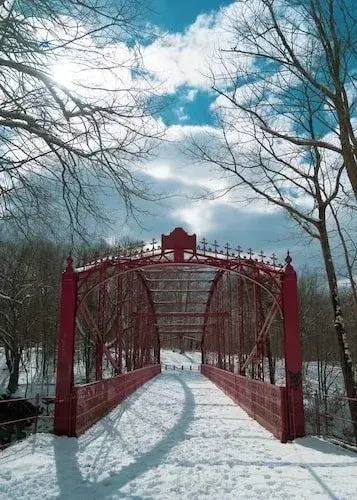
New Milford is the first real stop, and it’s where you’ll feel like you’ve arrived in Litchfield County.
It has one of the best town greens in Connecticut, in my opinion. It’s long. It’s lived in. And it feels like a real town center, not something polished up for visitors. Walk the green and the historic district around it before you do anything else.
On a Sunday, add Elephant’s Trunk Flea Market, just outside town. Get there early. The serious buyers are at the gate when it opens, and the good pieces leave with them. If dawn isn’t your thing, you don’t have to be first through the gate to find something worth taking home. I’ve met vendors who drive up from Virginia and the Carolinas to spread their wares on a blanket for the morning.
The other option is Lovers Leap State Park, where an old iron bridge is now a footpath with views over the water. It’s worth the short walk.
I’m still looking for my restaurant in New Milford. I’ve eaten in town and enjoyed the brewery up the road, but I haven’t found the dinner I’d build a whole day around. So I treat New Milford as a morning and midday stop, and I cap the day somewhere else.
A little history:
- The green is about a quarter-mile long, one of the longest town greens in Connecticut.
- Roger Sherman, who signed the Declaration of Independence, lived and worked in New Milford before he went into politics.
Kent: the browsing town
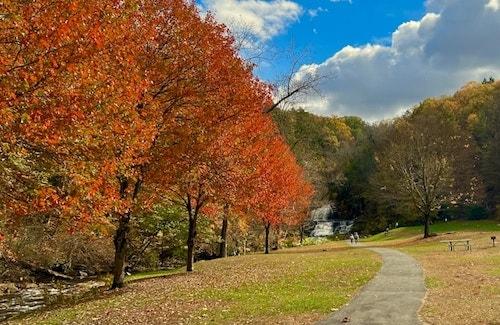
Kent sits about 20 minutes north of New Milford, still on Route 7 and still following the river.
If New Milford is all about the green, Kent is about the walk. Park once and wander the galleries, a couple of good bookshops, and plenty of shops worth poking around in. Kent Barns is a personal favorite.
I’m not usually starving when I’m in Kent, so more often than not we’re looking for coffee or a sandwich. I’m partial to Wilson’s by High Watch.
Every fall, the library runs a used book sale that spills into the lot next door, and I’ve lost an hour to it more than once. Kent is also the town where I quit claiming I’m just going to look, and walk out of House of Books 40 minutes later.
Just north of town is Kent Falls State Park, the famous one. It’s beautiful. In October, everyone else makes the trek up there too, and the lot can fill and close on peak weekends. Go in May if you like waterfalls and a little more personal space.
People will tell you to visit Bull’s Bridge, the covered bridge south of town. It’s fine. If it’s on your way, slow down and take a look, but I wouldn’t reorder the day for it. The town is the reason to stop in Kent.
A little history:
- Bull’s Bridge dates to 1842. It and the West Cornwall bridge are the only two surviving historic covered bridges in Connecticut that still carry cars.
- The Eric Sloane Museum is here. Sloane painted and collected the tools of early American farm life, and the museum feels more like an old barn than a gallery.
West Cornwall: one beautiful stop along the Housatonic River, & no more
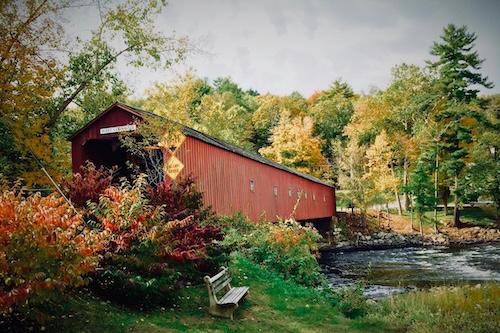
West Cornwall is a few minutes further north, a small town hugging a hillside above the Housatonic.
I’ll save you some time. West Cornwall is a stop. It is not a destination.
There’s a red covered bridge here. It’s beautiful, and it’s the whole reason to pull over. Park, walk it, take your pictures, and drive over it, of course. Watch the river run underneath, glance at the couple of shops in town, and get back in the car.
Fifteen, maybe 20 minutes.
One naming note trips people up, including me. The famous bridge is in West Cornwall. There’s a separate village nearby called Cornwall Bridge, and the bridge is not there. Set your map to West Cornwall.
Some places are better small.
A little history:
- The current bridge has carried traffic since 1864, and it still carries Route 128 today. Its lattice design came from Ithiel Town, a Connecticut architect who patented it.
Litchfield: where the day ends
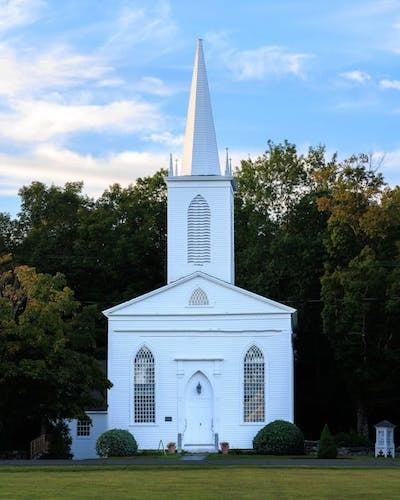
Litchfield is a turn east from the river, but it’s where I almost always end my day. It’s bigger than Kent and way bigger than West Cornwall, and its historic downtown has the range to match. That’s why I cap the day here. There’s enough choice for dinner.
Pick one of two walks:
- Topsmead State Forest. It was a private estate. At the center sits a storybook English cottage, with fields and stone walls all around it. It photographs so well you’ll be dodging engagement photos and family portraits.
- White Memorial Conservation Center. Bigger, quieter, and more of a real hike. It has lakes and a stand of tall pines that feels older than the rest of the woods. Share the trails with the horses. They have the right of way, since they spook easily.
Then, just outside town in Bantam, stop at Arethusa Farm Dairy for the ice cream. It was revived by two men from Manolo Blahnik’s U.S. business, which is more of a backstory than most ice cream needs. But man, it is good.
A little history:
- More than 475 buildings in the historic district are on the National Register of Historic Places.
- Some of that postcard-perfect colonial look came later. Around the turn of the 20th century, residents remodeled or replaced older homes in the Colonial Revival style, especially along North and South streets.
- Ethan Allen, of Green Mountain Boys fame, was born here.
The town I’d skip: Washington Depot
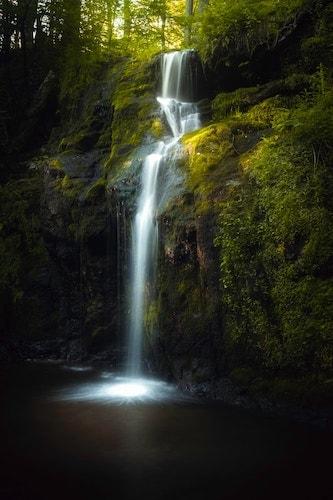
One nearby spot people oversell, in my opinion, is Washington, or Washington Depot, specifically. It’s said to have inspired Stars Hollow in Gilmore Girls, and that’s most of what people bring up. But there’s not a whole lot going on there compared with Kent or Litchfield. It doesn’t have Kent’s browsing or Litchfield’s range.
People mention that show a lot.
And then I keep driving to Litchfield. If you’re a devoted fan, go take a look. Otherwise, you’re not missing much. (G.W. Tavern, below, is the exception worth a detour.)
I will say that New Preston, a neighborhood of Washington, is quite the charmer. And it’s filled with charmingly rustic (though high-end) home decor shops. Worth a peruse if you’re into that.
Which Litchfield Hills town is right for you?
|
Town |
Go for |
Time you need |
Skip it if |
|---|---|---|---|
|
New Milford |
The long green, the Sunday flea market, Lovers Leap |
A morning |
You want a big dinner |
|
Kent |
Browsing: galleries, books, Kent Barns |
1–2 unhurried hours |
You hate shopping |
|
West Cornwall |
The covered bridge |
15–20 minutes |
Never. It’s on the way |
|
Litchfield |
History, two good walks, dinner |
Afternoon and evening |
Never. It’s the anchor |
|
Lake Waramaug |
Calm water, the loop, the vineyard view |
Half a day |
You need things to do |
|
Salisbury |
Rand’s View on the Appalachian Trail |
Half a day, plus the drive |
You can’t do a steep scramble |
|
Woodbury |
Antiques, colonial houses, a walk down Main Street |
A morning |
Antiques bore you |
|
Norfolk |
The Haystack Mountain tower, a pretty town walk, cooler air |
Half a day |
You’re short on time. It’s the far north |
|
Washington |
Gilmore Girls |
20 minutes |
You’re not a fan |
If you have a second day in the Litchfield Hills
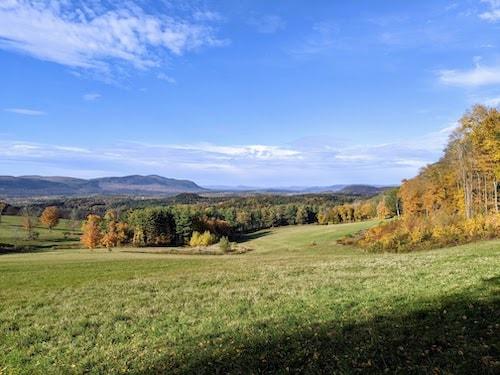
Lake Waramaug is very close. I camped there as a kid and biked the loop around the water, and it’s still as calm as I remember. There’s not that much to do around the lake, which is part of the appeal. You ride around, maybe park, maybe walk a stretch of the shore. While you’re there, stop at Hopkins Vineyard for the view.
Salisbury is the other trip, and it’s a long way from Greenwich, so I don’t get up there often. A few Octobers ago, my husband found Rand’s View on the Appalachian Trail. You park on a road nearby and walk. It’s a pleasant walk until a section where you’re climbing what is pretty much a cliff. You scramble up the rocks, walk a bit further, and you’re on the Appalachian Trail.
The view is sweeping, with rolling hills spread out beyond it. In mid-October, with the foliage, it’s gorgeous.
That’s my stretch of the Appalachian Trail in Connecticut. I’ve never walked the whole thing. Like Bill Bryson in A Walk in the Woods, I do it in bite-sized chunks.
On the same day, we saw Great Falls in Falls Village and the Burrall Bridge in Amesville, across the Housatonic River.
Woodbury and Norfolk
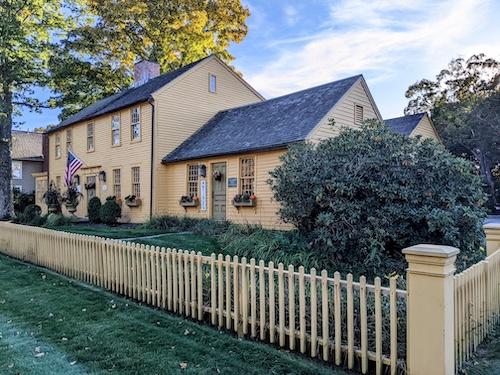
These two are one-visit towns for me so far, but both are worth a day on their own.
Woodbury is super cute, and it calls itself the antiques capital of Connecticut. We went up on an October Saturday and did what we always do. We parked the car, walked around, and took a lot of pictures of the colonial houses. Look up on Main Street and you’ll see King Solomon’s Lodge, a Masonic lodge sitting on top of a cliff. The Glebe House and its garden are on my list for next time. I’m very much a garden person. My grandparents used to love the 1754 House, back when it had a different name. It’s also said to be haunted.
Norfolk is way up north and out of the way, which is why I haven’t been back in a while. We hiked up to the stone tower at Haystack Mountain State Park, and in October the view was gorgeous. Then the sun started to go down, and the woods got a little creepy. It isn’t a long walk from the tower back to the lot, but we were ready to go.
Downtown Norfolk is a nice town to walk around, with pretty churches and an impressive library. I’m an architecture guy, and the Infinity Music Hall building looks very cool from the outside. Bring a layer. They call Norfolk the icebox of Connecticut for a reason, and it gets chilly up there much earlier than the rest of the state.
Best things to do in the Litchfield Hills
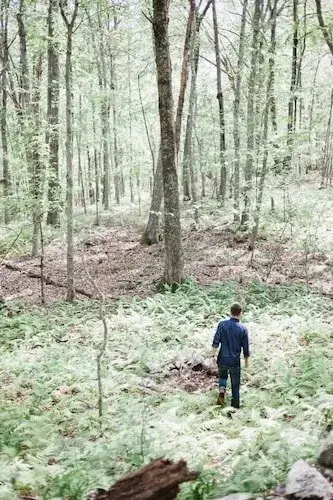
Waterfalls
- Kent Falls. The famous one. Go in May, or early on a fall morning.
- Campbell Falls. An easy half-mile walk through the woods. The falls are technically in Massachusetts, but you park in Connecticut, so it still counts.
- Great Falls, Falls Village. Big and loud when the water’s up. It sits by a hydroelectric dam, so the flow changes.
Hikes and parks
- White Memorial and Topsmead in Litchfield (see above).
- Mount Tom State Park. A trail of about a mile climbs to a 34-foot stone tower with a wide view. It’s short, but it’s steep in places.
- The Appalachian Trail, in chunks. Rand’s View if you can handle the scramble.
- Haystack Mountain and Dennis Hill in Norfolk. The park roads close to cars in the colder months, so it’s walk-in only.
Antiques and flea markets
- Elephant’s Trunk, New Milford, on Sundays. Early.
- Jeffrey Tillou Antiques, Litchfield. Three floors.
- Woodbury, for the most shops in one town. Mill House Antiques is in an old grist mill.
The one thing Connecticut antique shops lists never tell you is what each shop is good for perusing.
Wine
I’m not a huge fan of Connecticut wine, and I should probably try more of it before I act like the expert.
But the view from Hopkins Vineyard is great, and it’s worth a visit, especially if you’re at Lake Waramaug anyway. Why wouldn’t you? Check tasting-room hours before you go. They change by season.
Ice cream and flowers
- Arethusa Farm Dairy, Bantam. Pumpkin with Ginger Molasses Cookies is a seasonal flavor, so check before you make a special trip for it.
- Laurel Ridge, Litchfield. The private daffodil fields open to the public while they bloom, usually April into early May. It’s the concentrated version of fall color. No dogs or picnics, and you park along narrow Wigwam Road.
Winter
Mohawk Mountain in Cornwall is Connecticut’s largest ski area. Check the snow report before you go.
Where to eat in the Litchfield Hills

Litchfield has a cluster of restaurants, and almost all of them call themselves New American. So pick on the room as much as the menu. For me, ambiance is most of it.
- At The Corner, Litchfield. My favorite. Brick outside, brick inside, very cozy. It reminds me of The Ginger Man in Greenwich, and it’s great in the colder months. Some nights they have live music, though. I go to restaurants to eat and talk to whoever I’m with, so on those nights I eat somewhere else. Crotchety old man, I know.
- DiFranco’s, Litchfield. As an Italian American, I’m very particular about Italian food. Nobody cooks it as well as my mother, my grandmother and my aunts. DiFranco’s does a solid job. It has a good patio, too.
- West Street Grill, Litchfield. Go for the patio, in season.
- Arethusa al tavolo, Bantam. Very good. It moved from Litchfield to Bantam, next to the dairy.
- Hopkins Inn, Warren. Pretty good and old-fashioned throwback, with a lovely view over Lake Waramaug.
- The White Horse, Marbledale. British-American pub food, and kind of a cool spot.
- G.W. Tavern, Washington Depot. The original rooms go back to the 1850s and are super cool. The patio sits over the river.
- Wilson’s by High Watch, Kent. For the coffee-and-sandwich stop.
Where to stay in the Litchfield Hills & Northwestern Connecticut
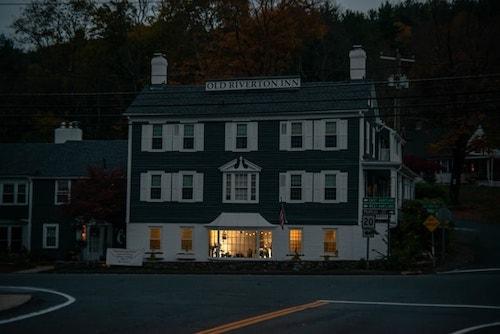
People ask me whether to stay up there overnight or do it as a day trip. Do both. Go on a day trip first, before you invest more money in a place. On a day trip, all you’ve spent is your time, your gas and whatever you ate. It’s the same thing I tell people about Greenwich.
Once you know you love it, come back and stay:
- Winvian Farm, Morris. Themed cottages on a big property, with a spa.
- The Hopkins Inn, Warren. Over Lake Waramaug. It’s open seasonally, roughly spring through New Year’s, so check the dates.
- The Abner, Litchfield. The old courthouse, now a hotel, right on the green.
- The White Hart, Salisbury. A classic old inn, and a good base for the northern towns.
- Mayflower Inn & Spa, Washington. The splurge.
If you’d rather keep a home base for the day trip, Greenwich is about 90 minutes south.
Best time to visit Litchfield County
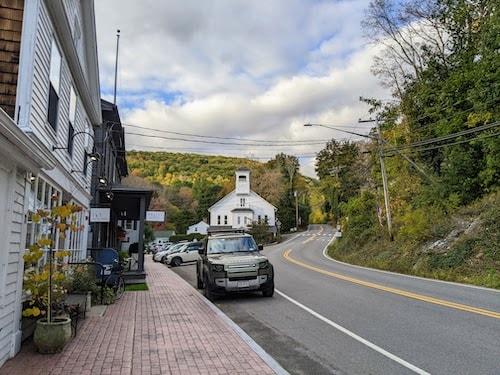
- Fall. Peak foliage, and peak crowds. Color usually peaks around the second week of October, with the higher northern towns turning first. Inns fill early and Kent Falls gets swamped. Go early in the day, or midweek if you can.
- Spring. My sleeper pick. You’ve just gotten through a Northeast winter, it’s finally nice enough to be outside, and the daffodils are out at Laurel Ridge. Kent Falls is quieter in May, with way more water.
- Summer. Lakes, swimming and music. Burr Pond’s swimming area is seasonal.
- Winter. Mohawk Mountain for skiing. Some park roads go walk-in only, and some inns and restaurants keep shorter hours. Bethlehem, Connecticut, goes all out for the holiday season, as you might guess from the name.
Whatever the season, check hours the day you go. Small places up here keep their own schedules.
Litchfield Hills FAQ
What are the Litchfield Hills?
The Litchfield Hills are the hilly, rural northwest corner of Connecticut, mostly in Litchfield County. People go for the historic towns and village greens, covered bridges, waterfalls, antiques and fall foliage, and for hiking on the Appalachian Trail.
Is the Litchfield Hills the same as Litchfield County?
Not exactly. The Litchfield Hills cover most of Litchfield County, and people use the two names loosely. For planning a trip, you can treat them as the same area.
What towns are in the Litchfield Hills?
The best-known towns include Litchfield, Kent, New Milford, Washington, Woodbury, Salisbury, Norfolk, Cornwall and West Cornwall, and New Preston on Lake Waramaug. For a first visit, I’d pick New Milford, Kent, West Cornwall and Litchfield.
Can you visit the Litchfield Hills as a day trip from New York City?
Yes. New Milford, at the southern edge of the Litchfield Hills, is about two hours from Manhattan by car. So the one-day route through New Milford, Kent, West Cornwall and Litchfield works as a long day trip. Allow more time for Salisbury and Norfolk in the far north.
What is the best driving route through the Litchfield Hills?
My favorite is Route 7 north along the Housatonic River: New Milford, then Kent, then West Cornwall, then east to Litchfield for dinner. It’s four stops on one clean line, and it fits in a day.
How many days do you need in the Litchfield Hills?
One day is enough for a first trip to the Litchfield Hills if you follow the route through New Milford, Kent, West Cornwall and Litchfield. With two days, add Lake Waramaug, or head north to Salisbury and the Appalachian Trail.
Do you need a car to visit the Litchfield Hills?
Yes. There’s no train into the Litchfield Hills, and the towns are spread out. Once you park in a town like Kent or Litchfield, though, you can walk around easily.
Are the Litchfield Hills worth visiting outside fall?
Yes. Spring brings daffodils at Laurel Ridge and quieter trails, summer brings lakes and music, and winter brings skiing at Mohawk Mountain. Fall is the busiest season, not the only good one.
Are the Litchfield Hills good for families?
Yes. Easy walks like Topsmead and White Memorial, lakes in summer, and ice cream at Arethusa Farm Dairy all work with kids. Rand’s View is not a family hike.
When is peak foliage in the Litchfield Hills?
Usually around the second week of October, with the higher northern towns turning first. Weather can move peak color by a week or more, so check the Connecticut DEEP foliage report before you go.
How do the Litchfield Hills compare to the Berkshires or the Hudson Valley?
The Litchfield Hills are the smallest and quietest of the three: historic towns, village greens and country drives, and the closest to New York City. The Berkshires have the bigger arts and music scene and more of a mountain-town feel. The Hudson Valley is bigger and more varied, with more going on in its river towns.
Each one has its own personality, too. Litchfield County is probably the most uptight of the three. The Berkshires are funkier, more like Vermont without being uptight about it. And the Hudson Valley is grittier.
That said, the Litchfield Hills are the most approachable, since they’re so close to New York City. That also means they’ve definitely been discovered. Why do you think an inn 90 minutes away is writing a guide about them?
Four towns, one river, one good day
That’s the whole version of the Litchfield Hills. New Milford for the green and your morning. Kent for the walk and the shops. West Cornwall for one beautiful stop and no more. And Litchfield to finish the day and feed you at the end.
You don’t have to do all of it, of course. Pick the day you actually want, and build four stops around it.
And make sure dinner is the last one.
Before you go, grab the free Litchfield County visitor’s guide I put together. It has the route, the map and the video, ready for the car.
Keep planning:
- Visitor’s guide to Litchfield, Connecticut
- Visitor’s guide to Woodbury, Connecticut
- Visitor’s guide to Norfolk, Connecticut
- Cute towns in Connecticut, from Litchfield County to Stonington, Connecticut, and everywhere in between
- The definitive New England fall road trip guide, if you want to include this in a bigger Fall trip
Updated and republished: September 28, 2026


